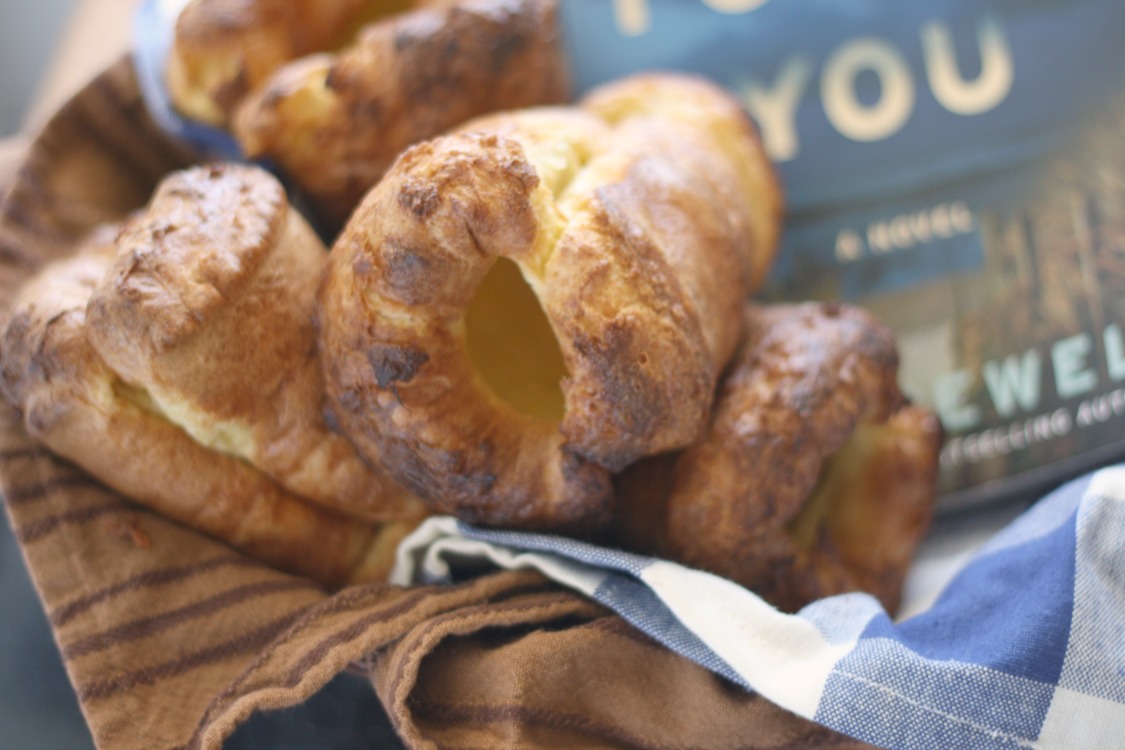
Tuscan Bread is one of the things that has been on my to-make list for quite a few years now. Honest to goodness, real, UNsalted Tuscan Bread (or Pane Toscano). Pane Toscano is a particularly large roundish loaf of bread that is traditionally cooked in the wood-fired ovens of Tuscany. Aside from being so large, its main distinction is its lack of salt. It is made with sourdough or a bit of a starter, which gives it a slight tang, and it has a thick, chewy crust.
The dough is somewhat wet and slack, but the moisture in the dough, combined with a bit of steam (introduced here with ice cubes) and a super-hot oven, gives you that magical, sought-after crust crackle (sometimes called a singing crust) once the loaf is pulled from the oven. Once you've removed the loaf from the hot oven and it begins to cool, the inside of the bread contracts a bit, which pulls at the crust. That thick, hard crust that was formed begins to form hairline fractures and cracks from the pressure, hence that much desired crackle.
I'll just say, that beautiful singing crust can incite quite the reaction. At one point, my whole family was gathered around the counter oohhing and aahhing over it.
posts may contain Amazon affiliate links, which earn me a small commission when you buy (but doesn't cost you anything extra). Occasionally I receive free products and/or run sponsored posts—this will always be stated clearly in the post. Thank you for supporting this blog.
This website contains some quotations, excerpts, and screen clips from copyrighted material. These uses fall well within the copyright doctrine of "Fair Use".
olive oil
Showing posts with label olive oil. Show all posts
Tuesday, March 3, 2015
Pane Toscano (Tuscan Bread)
Thursday, September 6, 2012
Whole Wheat Couscous w/ Smoked Salmon, Baby Kale, & Za'atar (+ The Village Press Bag 'n Box Olive Oil)
Okay. I have a question for you. Have you ever purchased wine in a box? Have you ever enjoyed it? A show of hands, please.
I'm gonna go ahead and raise add my hand to those raised high (or raised low). I have. I don't do it regularly, but that's not because I haven't found a good one. Back in the day, wine-in-a-box was a cheap way to get a lot of wine. Or an easy way to drink without your parents knowing. If they weren't home. I mean, you can't actually see the level of the alcohol, let alone mark it.
I know there's some wine snobs out there who have probably already cursed me and stopped reading. Their loss. Bag-in-box wines have really evolved over the past 5-8 years, in my opinion and they're used more often to save on costs - both for the manufacturers and the consumers. But I digress...I'm not actually here to talk about wine-in-a-box. I want to talk about its cousin, olive-oil-in-a-box. The Village Press Olive Oil in a box to be precise.
Much like wine, olive oil in a box is a wonderful way to reduce costs for food service establishments and those who use a decent amount of olive oil in their everyday life (like you and me...food bloggers, foodies, and people who spend a lot of time in their home kitchens, too).
The Village Press bag-in-box Olive Oil has a tap for easy use and is very easy to store. I have a ridiculous amount of glass bottles (that I'll never give up completely) lining my shelves and often I'm playing catch-that-bottle while searching for something that has found its way to the back of the shelf. I love the idea of being able to eliminate one bottle. It may seem insignificant, but that bottle could be the one that slipped by me and is now oozing all over the floor. Making me sad and annoyed all at the same time. The bag-in-box stores easily, is at the ready when I am, and it helps to retain the integrity of both the flavor and the nutrients present in the oil by blocking out harmful ultra-violet rays.
Sold!
product: The Village Press Bag 'n Box Olive Oil (The Village Press Extra Virgin New Zealand Barnea Olive Oil)
category: food
packaging: sleek, easy-to-store bag-in-box with tap that holds 1 litre (32 oz.)
appearance: greenish-yellow
taste: grassy and (oddly enough) somewhat spicy
about: The Village Press Olive Oil is made from the most widely grown variety of olive in New Zealand, the Barnea. Their grove sits in the golden wine triangle of Hawke's Bay (olives do well in the same conditions that grapes do). Due to the fact that they do not filter their olive oil in order to retain the most natural flavor and nutritional value from the olives, the appearance will be slightly cloudy.
Since olive oil is best stored out of direct sunlight and in a cool, dark place, The Village Press olive oil is packaged in dark bottles (or bag-in-box) to help deflect ultra-violet rays that can break down the oil and destroy its health-giving properties. The bag-in-box is perfect for bulk and restaurant sales.
The Village Press Olive Oil making process:
my thoughts: This is a great olive oil for drizzling over bruschetta, breads, and salads. It has an assertive flavor adds depth to any dish. It's great when mixed with herbs and a freshly baked loaf of bread for dipping. Add some cured meats, farmer's cheese, and a bottle of wine for one of my favorite types of meals. Oh yeah, and it was the perfect compliment to this meal of whole wheat couscous combined with hot-smoked salmon, baby kale, and za'atar. The spicy, grassy notes were very present in each bite...especially when drizzled over the top before serving.
verdict: Thumbs up. I will spend money on this.

*I received one free box (1 Litre) at no charge to test, try, and review. All opinions stated in this post are 100% my own.
I am sharing this post with:
PPN host: Briciole
I'm gonna go ahead and raise add my hand to those raised high (or raised low). I have. I don't do it regularly, but that's not because I haven't found a good one. Back in the day, wine-in-a-box was a cheap way to get a lot of wine. Or an easy way to drink without your parents knowing. If they weren't home. I mean, you can't actually see the level of the alcohol, let alone mark it.
I know there's some wine snobs out there who have probably already cursed me and stopped reading. Their loss. Bag-in-box wines have really evolved over the past 5-8 years, in my opinion and they're used more often to save on costs - both for the manufacturers and the consumers. But I digress...I'm not actually here to talk about wine-in-a-box. I want to talk about its cousin, olive-oil-in-a-box. The Village Press Olive Oil in a box to be precise.
Much like wine, olive oil in a box is a wonderful way to reduce costs for food service establishments and those who use a decent amount of olive oil in their everyday life (like you and me...food bloggers, foodies, and people who spend a lot of time in their home kitchens, too).
The Village Press bag-in-box Olive Oil has a tap for easy use and is very easy to store. I have a ridiculous amount of glass bottles (that I'll never give up completely) lining my shelves and often I'm playing catch-that-bottle while searching for something that has found its way to the back of the shelf. I love the idea of being able to eliminate one bottle. It may seem insignificant, but that bottle could be the one that slipped by me and is now oozing all over the floor. Making me sad and annoyed all at the same time. The bag-in-box stores easily, is at the ready when I am, and it helps to retain the integrity of both the flavor and the nutrients present in the oil by blocking out harmful ultra-violet rays.
Sold!
product: The Village Press Bag 'n Box Olive Oil (The Village Press Extra Virgin New Zealand Barnea Olive Oil)
category: food
packaging: sleek, easy-to-store bag-in-box with tap that holds 1 litre (32 oz.)
appearance: greenish-yellow
taste: grassy and (oddly enough) somewhat spicy
about: The Village Press Olive Oil is made from the most widely grown variety of olive in New Zealand, the Barnea. Their grove sits in the golden wine triangle of Hawke's Bay (olives do well in the same conditions that grapes do). Due to the fact that they do not filter their olive oil in order to retain the most natural flavor and nutritional value from the olives, the appearance will be slightly cloudy.
Since olive oil is best stored out of direct sunlight and in a cool, dark place, The Village Press olive oil is packaged in dark bottles (or bag-in-box) to help deflect ultra-violet rays that can break down the oil and destroy its health-giving properties. The bag-in-box is perfect for bulk and restaurant sales.
The Village Press Olive Oil making process:
- The trees are shaken at harvest time and ripe fruit collected in a blanket under the tree.
- The olives are washed to remove leaves.
- They are then put in a mill which crushes and grinds them into a paste.
- A chamber holds the paste while it is gently paddled to release the oil molecules.
- The olives are then pressed in either the old style or a modern centrifugal press system.
- After pressing, the oil is decanted or separated and stored in stainless steel tanks until bottling.
- The oil is bottled using an automated bottling and labelling line (in house).
- In the centrifugal press, olives are crushed. A maximum water heat of 28°C is used to assist oil extraction earning its acclaimed status of "cold pressed". This means The Village Press olive oil retains all the nutritional values highly prized with olive oil of this calibre.
- Every bottle is stamped with a pressing date.
my thoughts: This is a great olive oil for drizzling over bruschetta, breads, and salads. It has an assertive flavor adds depth to any dish. It's great when mixed with herbs and a freshly baked loaf of bread for dipping. Add some cured meats, farmer's cheese, and a bottle of wine for one of my favorite types of meals. Oh yeah, and it was the perfect compliment to this meal of whole wheat couscous combined with hot-smoked salmon, baby kale, and za'atar. The spicy, grassy notes were very present in each bite...especially when drizzled over the top before serving.
verdict: Thumbs up. I will spend money on this.
Whole Wheat Couscous w/ Smoked Salmon, Baby Kale, & Za'atar
by Heather Schmitt-González
Prep Time: 15 minutes
Cook Time: 5 minutes
Keywords: entree salad salmon fish couscous kale
Ingredients (serves 2-4)
- 1 c. vegetable broth (or water)
- 2 tsp. olive oil + more to finish
- ~¼ tsp. sea salt
- ⅔ c. whole wheat couscous
- 2 handfuls baby kale
- 2 green onions, chopped
- 4 oz. (hot-) smoked salmon fillet, skinned & flaked
- freshly ground black pepper
- ~1½ tsp. Za'atar
- pinch crushed red chile flakes
Instructions
Bring vegetable broth, olive oil, and salt to a boil. Stir in couscous, cover and turn off heat. Let sit 5 minutes. Fluff with a fork.
Stir in remaining ingredients, then taste and adjust seasoning.
Give the whole thing a good drizzle and sprinkle with a pinch more Za'atar. Enjoy warm, at room temperature, or cold.
Store any leftover in an airtight container in the fridge for up to 1 day.
Powered by Recipage
I am sharing this post with:
PPN host: Briciole
Thursday, June 30, 2011
Orange-Almond Olive Oil Cake (using Sunkist Valencia Oranges)
This is a Sponsored post written by me on behalf of Sunkist. All opinions are 100% mine.
Have you ever wondered why Valencia oranges sometimes look like they are not yet ripe? You see them in the store and maybe you even pass them by because the peels are still tinged with green. I mean, those naval oranges sitting right next to them are fully orange, so you toss those in the cart instead. Well, I admit that I used to do that. Key words: USED TO!! I recently found out that Sunkist Valencia Oranges go through a natural process called re-greening. Valencia Oranges, also know as Summer Oranges may occasionally "re-green" in warm weather.
Valencias ripen on the tree and turn bright orange, but when temperatures begin to warm up, their skin reabsorbs chlorophyll as they hang on the tree and cause the orange to look partly green. This has absolutely no effect on the inside of the orange, though. The fruit remains ripe, juicy and oh-so-delicious. If you like, you can check out this Sunkist Valencia Oranges Re-greening Video. So, I tend to agree with the saying that Green is Good when it comes to Sunkist Valencia Oranges. While I still like naval, mandarin, blood, or any variety of orange, actually...Valencia's have fantastic flavor for juicing and eating out of hand, as snacks. If you want to squeeze your Valencia's for juice the night before, simply squeeze the juice, cover tightly and chill overnight. If done like this, no loss of flavor or Vitamin C will occur. Add a ½ cup of juice and a ½ cup of diced orange to a blender and add some fresh fruit, and/or berries and a ½ cup of yogurt and you've got a nutrition-packed way to start your day. A great idea for snacking is to cut the Valencia's into "smiles" by cutting in half crosswise and then cutting 3 or 4 wedges from each half. What kid (of any age) doesn't love sticking an orange wedge in their mouth and pretending it's their smile?
I wanted to create a recipe using the sweet citrus flavors of Sunkist Valencia Oranges, and this moist Orange-Almond Olive Oil Cake, that is perfect with a cup of coffee or a cup of tea, is what I came up with.
Orange-Almond Olive Oil Cake
an original from the kitchen of girlichef
serves: ~10
cake:
240 grams (8.5 oz. / ~2 c.) cake flour
141 grams (5 oz. / ~1¼ c.) finely ground almond meal/flour
2 tsp. baking powder
½ tsp. baking soda
½ tsp. fine sea salt
322 grams (11.4 oz. / 1½ c.) superfine sugar
½ c. (4 floz. / 102 g) olive oil
½ c. (4 floz. / 119 g) almond milk
finely grated zest of 2 oranges (~1 Tbs.)
¼ c. (2 floz. / 60g) freshly squeezed Valencia Orange juice
½ tsp. almond emulsion or extract
¼ tsp. orange extract
3 eggs
glaze:
127 grams (1 c. / 4.5 oz.) powdered sugar
1-2 Tbs. (15-30 g / .5-1 floz.) freshly squeezed Valencia Orange juice
garnish:
peeled, blanched Almonds (whole, sliced, or slivered), optional
an original from the kitchen of girlichef
serves: ~10
cake:
240 grams (8.5 oz. / ~2 c.) cake flour
141 grams (5 oz. / ~1¼ c.) finely ground almond meal/flour
2 tsp. baking powder
½ tsp. baking soda
½ tsp. fine sea salt
322 grams (11.4 oz. / 1½ c.) superfine sugar
½ c. (4 floz. / 102 g) olive oil
½ c. (4 floz. / 119 g) almond milk
finely grated zest of 2 oranges (~1 Tbs.)
¼ c. (2 floz. / 60g) freshly squeezed Valencia Orange juice
½ tsp. almond emulsion or extract
¼ tsp. orange extract
3 eggs
glaze:
127 grams (1 c. / 4.5 oz.) powdered sugar
1-2 Tbs. (15-30 g / .5-1 floz.) freshly squeezed Valencia Orange juice
garnish:
peeled, blanched Almonds (whole, sliced, or slivered), optional
Preheat oven to 350° F. Grease a 10" x 4¼" tube pan (or a bundt pan) and flour lightly.
for cake:
Combine cake flour, almond meal, baking powder, baking soda, and salt in a small bowl.
Combine remaining ingredients in a large bowl and beat with a mixer, at low speed until smooth and well combined, ~1-2 minutes. Add flour mixture and mix.
Pour batter into prepared pan.
Slide into oven and bake for ~45 minutes, or until a toothpick inserted in center comes out clean. Place entire pan on a wire rack and let cool for ~15 minutes. Carefully turn cake out of pan, flip right side up again and set it back on the rack to finish cooling.
finishing:
Stir about half of the orange juice into the powdered sugar, add a bit more until smooth and the consistency you want. Drizzle evenly over cooled cake. Garnish with almonds, if using.
You can find additional Sunkist citrus recipes and ideas by visiting Sunkist. And remember, when it comes to Sunkist Valencia Oranges, green is good.
*I am sharing this post with:
Subscribe to:
Posts (Atom)
_4337%2Bwords.jpg)