posts may contain Amazon affiliate links, which earn me a small commission when you buy (but doesn't cost you anything extra). Occasionally I receive free products and/or run sponsored posts—this will always be stated clearly in the post. Thank you for supporting this blog.

This website contains some quotations, excerpts, and screen clips from copyrighted material. These uses fall well within the copyright doctrine of "Fair Use".
European Culinary ABC's
Showing posts with label European Culinary ABC's. Show all posts
Monday, June 3, 2013

Hong am Rèisleck + a visit to Luxembourg {#abbecedarioUE}

Monday, June 3, 2013

Hong am Rèisleck + a visit to Luxembourg {#abbecedarioUE}

Hong am Rèisleck + a visit to Luxembourg {#abbecedarioUE} | www.girlichef.com

Luxembourg is the eighth stop on our (alphabetical by dish) Culinary Journey through Europe - and I am super excited to be the host on this stop!  I first discovered this group through one of my fellow Cook the Books hosts, Simona.  It sounded right up my alley - a journey through Europe, doing a little mini-study on each country.

Although life got crazy and the train has whizzed right by some of the countries for me (I did make the stops in the Netherlands and Slovakia), I'm so happy to be giving you a quick glimpse of this breathtakingly beautiful country!  Seriously, I didn't know much (okay, anything) about Luxembourg until now.  But, oh, how I wish I could set foot there for real one day soon.  Especially the Moselle Valley...by all looks, I could make a life there!

Now, obviously I'm no expert...and I haven't done extensive research...so by all means, if you are from (or know anybody from) Luxembourg, please feel free to add to what I've found.  Here goes:

Official name:  Grand Duchy of Luxembourg
Languages:  Luxembourgish, French, German, and even English is widely spoken
Geography:  Area 2.586 square kilometers/ 999 square miles
Neighboring countries: Germany, Belgium, France
Population: 511,800
Capital: Luxembourg City
Currency: Euro
Climate: Luxembourg enjoys a temperate climate with no extremes, thanks to the influence of the sea traveling over the lands to Luxembourg.  May and June are the sunniest months, but July and August are the hottest months.  The end of the year brings cold weather and snow.  The best time for a vacation to Luxembourg would be from May through Mid-October when the most pleasant temperatures prevail.
Government: Constitutional Monarchy under a system of Parliamentary Democracy (Head of State - HRH Grand Duke Henri)
Time zone: UTC+1
Luxembourg City: Although Luxembourg itself is a small country, its capital, Luxembourg City, is full of life and culture.  It is home to at least 150 different nationalities, which contribute to its eclectic mix of creative, multicultural programs and activities.  You can find museums, theaters, and concert halls in the city, as well as an abundance of green spaces like parks and gardens. Sitting alongside historic monuments and ancient fortresses are hi-tech buildings and contemporary architecture.  It is also part of the UNESCO World Heritage.
North Luxembourg:  Picturesque villages, forests, medieval ruins and fortifications, winding valleys, and scenic highlands - as well as hiking and cycling trails that allow you enjoy all of that, make Eisleck or Oesling (the Luxembourg Ardennes) a destination spot!

Visit castles and nature reserves (Naturpark Our or Naturpark Oewersauer), or parks dedicated to mountain biking or Nordic walking, hike the length of the Sure, the Wark, or the Alzette and be amazed by sculpted landscapes and rock formations.  In this area you will also find markets, outdoor performances and concerts, and even medieval revival festivals!
Mullerthal:  Often referred to as the Little Switzerland of Luxembourg due to its unique rock composition and soil erosion that have created a landscape similar to that of Switzerland.  This area contains attractions such as The Benedictine Abbey of Saint Willibrord, and a Roman Villa.  The Mullerthal Trail spans 110 kilometers of stunning valley trails that can be hiked by one with experience.  you would find rock formations and footpaths that will lead you through fields and forests, as well as opportunities for walks that are a bit more tame, offering numerous views of breathtaking proportions.

Here you will also find rich, local cuisine based on honey, cheese, and liqueurs, as well as first-class restaurants serving "refined" dishes in the natural environment of the Lower Sure valley.
The Moselle Valley: Wine and water!  One of the most stunning valleys of Luxembourg, Moselle is famous for its wineries, vineyards, charming hotels, and medieval towns.  The Moselle River is one of Luxembourg's major rivers with a trajectory along the Luxembourg border than runs 39 kilometers in length and forms a natural boundary with Germany.

Steep hills and vineyards are the Moselle Valley's claim to fame, and it is the birthplace of Luxembourg wines such as Riesling, Auxerrois, and Pinot Gris.  You can also find large plantations of fruit trees, which lead to the prodution of juices, liqueurs, and schnapps.  If you visit, you can find many themed hikes which will allow you to fully discover this beautiful regions.

Equally desirable to the wine and fruit that are a product of this region, are water sports!  The Moselle River allows for swimming, water skiing, boating, and even some year-round cruises.
South Luxembourg: In the south of the country, you will find The Land of the Red Rocks, or the Terres Rouges region.  Back in the industrial era, Luxembourg had a successful steel mining industry due to the red ore found in the area.  The former steelworks in this area have been repurposed to serve modern times and the region's industrial culture.

You'll find more modern, trendy cities that form a youthful, dynamic atmosphere in the south of Luxembourg.  Street theater, concert halls (like the famous Rockhal), and rock festivals help form this new, urban complex.  The major commercial cities of Luxembourg are here, including Esch-sur-Alzette, Differedange, and Dudelange.  The future campus of the University of Luxembourg will be located in Esch-Belval, of the Terres Rouges region.

Among the attractioins in this former mining area, there is also a wide range of family and children's activities, such as discovering underground galleries of the old mines of Rumelage via creaking locomotive wagons, or stop by the Parc Merveilleux in Bettembourg to view the crocodiles, parrots, snakes, and monkeys.

Cuisine: From the mountains in the north of Luxembourg, you'll find smoked meats, particularly ham and pork, served with beans, potatoes, and local vegetables - including the national dish of Luxembourg, Judd mat Garrdebounene, a traditional smoked collar of pork that has been soaked overnight, then boiled with vegetables and spices.  It is then sliced and served with broad beans and boiled potatoes.

Trout, pike, and crayfish are the basis for many dishes from the local rivers.  There are also many bakeries and patisseries serving local cakes, fruit pies, and pastries, as well as small sugar-coated doughnuts, and äppelklatzen (apples in pastry).  The local cheese specialty is kachkeis or cancoillotte, a soft spread.  Liver dumplings with sauerkraut and boiled potatoes...black pudding with applesauce, sausage with mashed potatoes and horseradish, green bean soup...the dishes vary from region to region, but the thing that they all have in common is the reliance on local meats, fish, and produce.

Many dishes are served in a Riesling sauce, made with the local wine from the Moselle Valley I talked about earlier.  It is often served over seafood, or in another popular dish, Hong am Rèisleck, which I made today.  In its most basic form, it is browned chicken with mushrooms in a white wine sauce (similar to the French Coq au Vin).  Served over noodles or dumplings, it is simple, creamy and delicious, comfort food at its best.

Hong am Rèisleck (Chicken in Riesling)
Hong am Rèisleck + a visit to Luxembourg {#abbecedarioUE} | www.girlichef.com
by Heather Schmitt-Gonzalez
Prep Time: 10-15 minutes
Cook Time: 45 minutes
Keywords: simmer entree chicken mushrooms wine Luxembourg

Ingredients (serves 6-8)
  • 3 ounces (6 tablespoons) butter, divided
  • 1 (4-5 pound) chicken, broken down into 8 pieces
  • 2 small onions, chopped
  • 2 cloves garlic, finely chopped
  • 1.5 ounce (3 tablespoons) Cognac or Sherry
  • 1 cup Riesling
  • 1/4-1/2 cup chicken stock/broth
  • 6 ounces mushrooms (cremini or button), chopped or sliced
  • 1 tablespoon flour
  • 4 fluid ounce heavy cream or half & half
  • 1 large egg yolk
  • sea salt
  • freshly ground pepper
  • freshly grated nutmeg
  • small handful parsley, roughly chopped
  • hot noodles or dumplings, for serving
Instructions
Heat half of the butter in a large, wide pan with deep sides over high heat until hot. Season chicken with a bit of salt and pepper and add to the hot pan, skin side down. Sauté until skin has browned, then flip over. If your pan isn't large enough to hold all of the chicken at once, do this in two batches, removing the first batch to a plate and returning it with the juices it's released back to the pan before the next step. Add shallots and garlic to the pan, and continue to sauté for another minute or two.

Carefully add the Cognac to the pan and allow it to almost evaporate. Add the Riesling and chicken stock to the pan, turn heat down to a gentle simmer, and allow to cook for about 20-30 minutes, or until the chicken is cooked all the way through.

While this is cooking, put the remaining butter into a pan and sauté the mushrooms until they just begin to turn golden in spots. Add them to the pan with the chicken. Whisk together the flour, heavy cream, and egg yolk; pour over and around the chicken while stirring/moving everything around, and immediately turn off the heat. Season to taste with a bit more salt and pepper, and a few grates of fresh nutmeg. Stir in the parsley.

Serve hot over hot buttered noodles or with dumplings.
Powered by Recipage
Hong am Rèisleck + a visit to Luxembourg {#abbecedarioUE} | www.girlichef.com
Can't figure out what to make?  Browse these Recipes from Luxembourg for inspiration!

ABC_CEThis month on the European Community Culinary ABC's journey we are going to Luxembourg.  I am the host this round, and kicking it off with H is for Hong am Rèisleck.   Abbecedario Culinario was started by Trattoria Muvara.


 Do you want to be a part of our culinary journey stop in Luxembourg?  
If so, simply:
  • Post a recipe from Luxembourg by midnight on Sunday, June 23, 2013
  • In your post, please link to this post and to the Abbecedario Culinario community page (use of logo is optional, but always appreciated).  You may link up an older post if you update it with these links.
  • Leave a link to your post in the linky tool below in this manner (Name of dish - Your name from Your blog name) - or in the comment section if you cannot figure it out, and I will add it.  
  • Please leave a comment on this post letting me know that you've joined us on our trip to Luxembourg!
I can't wait to see what dishes Luxembourg inspires you to make in the kitchen!

Recipes from Luxembourg


This linky list is now closed.

sources:
Visit Luxembourg (*all photos of Luxembourg in this post are courtesy this site)
Luxembourg cuisine 
Wednesday, February 13, 2013

Rožky (Slovak Bread Rolls) {European Culinary ABC's}

Wednesday, February 13, 2013

Rožky (Slovak Bread Rolls) {European Culinary ABC's}

These Slovak Bread Rolls mark the second stop on our European Culinary journey, the Slovak Republic (Slovakia for short).  Slovakia is yet another country that I know absolutely nothing about.  Sadly, I will be saying that a lot over the next year and a half (and 26 European communities).  I love learning about other cultures.  Now.  Back in the day when my brain would have soaked up that information like a sponge, I was less interested.  Sigh.  Why is youth wasted on the young? {wink}

What I do know about Slovakia?  They were once the other half of Czechoslovakia before their peaceful dissolution in 1992.  They kept the "slovakia" half... and the Czech Republic kept the "czech" half.  Brains.  I got 'em.

Their cuisine is comparable to (perhaps obviously) that of the Czech Republic, but also that of Austria, Hungary, the Ukraine, and Poland.  Pork, poultry, potatoes, flour, cabbage, and milk are all staples.  Also, thanks to the popularity of hunting and vast forestation, game is also fairly popular.  Traditionally, white, sweeter wines were the most popular, as well as Pilsner beers, but tastes have evolved to include reds, dry wines, and dark lagers today.
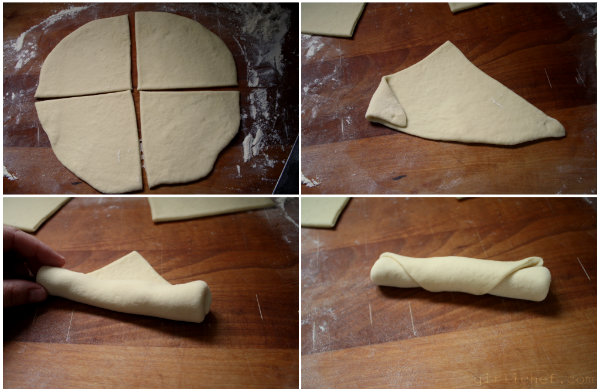
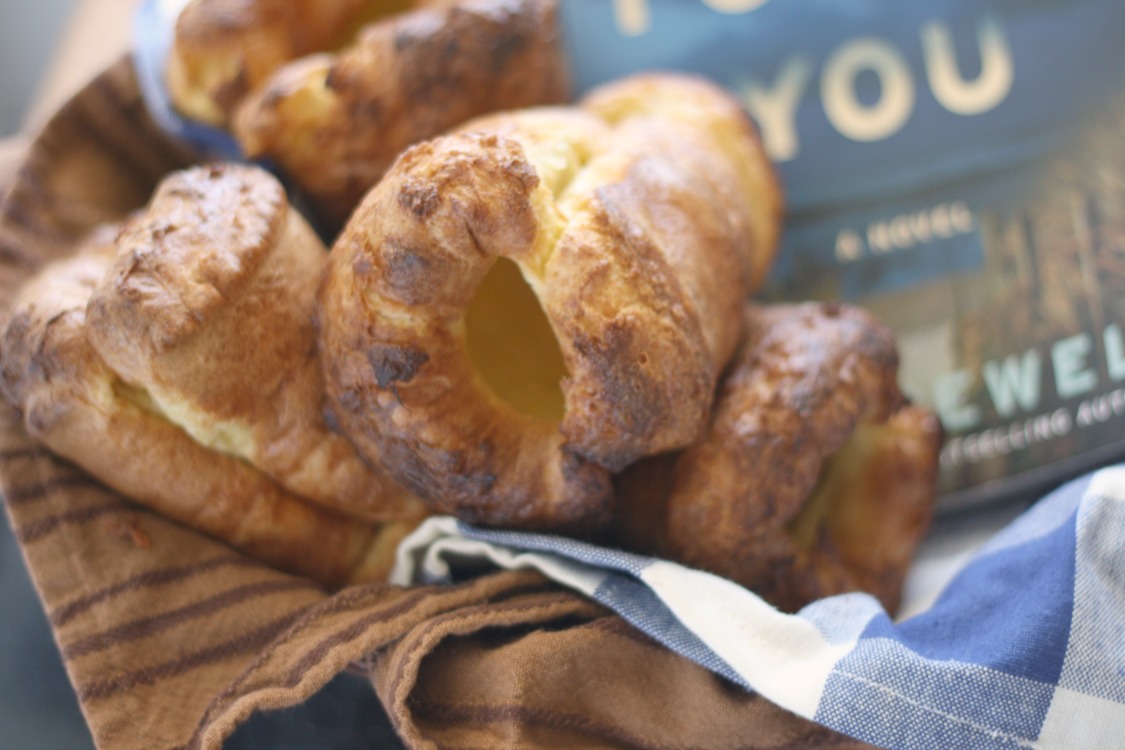
Of all of those traditional influences, I went with perhaps the most basic - flour.  I am not 100% sure if this is true, but I read that Rožky is the most popular form of bread in Slovakia.  The dough is cut into triangles and rolled into a tubular form and curved slightly.  My curves sort of righted themselves in the oven, so you have to look closely.  My shaping can use a bit of work, but these are very simple rolls to make.

And you know we love our bread in this house.  I love how every country has the same basic bread recipe with the variations coming in size or shape, or perhaps fillings or toppings.  But good bread warms the soul worldwide.

Rožky (Slovak Bread Rolls)

by Heather Schmitt-González
Prep Time: ~3 hours (mostly unattended)
Cook Time: 15-20 minutes
Keywords: bake bread Slovak

Ingredients (16 rolls)
  • ~3½ - 4 c. bread flour
  • 1½ c. milk, lukewarm
  • ¼ c. vegetable oil
  • 2 Tbs. sugar
  • 2 tsp. salt
  • 2¼ tsp. active dry yeast
optional:
  • water/cream/egg wash
  • seeds (cumin, poppy, sesame)
  • chopped herbs
Instructions
Dissolve yeast in milk until frothy. Add to bowl with remaining ingredients (starting with the lesser amount of flour) and stir until combined. Turn out onto a lightly floured work surface and knead until smooth and pliable. Set in an oiled bowl, cover and let rise until doubled in size, ~60 minutes.

Line one or two baking trays with parchment paper or a silpat (or grease it).

Divide dough into 4 equal pieces. Keep remaining dough under towel or plastic while working with one piece.
Roll each portion into a circle ⅛-¼" thick. Cut circle into quarters.

Grab the points of the long end of each quarter and fold/tuck in. Starting at that long end, roll tightly, securing as you go. Once dough is in a cylinder shape, pinch seams together and curve ever-so-slightly. Set on prepared baking tray(s), seam side down.
Cover with a clean kitchen towel or plastic wrap and let rise until doubled, ~45-60 minutes.

Preheat oven to 375° F during last 15 minutes of rise time. If you like, brush top with a bit of water, cream, or egg wash and sprinkle with seeds or herbs.
Slide into preheated oven and bake for 15-20 minutes, or until golden brown and cooked through.

adapted from slovak cooking
Powered by Recipage


For more information on Slovakia, check out this website - especially the photos, they're gorgeous!

ABC_CEOur second stop on this European Community Culinary ABC's journey is Slovakia.  Hosting this month is Terry at Crumpets & co. with B is for Bryndzové haluÅ¡ky.  If you'd like to join us on this journey, we'll be in Slovakia until February 17!

I am also sharing this post with:
Yeastspotting
Bake Your Own Bread
Friday, January 11, 2013

Boerenkool Stamppot (Kale Mash Pot)

Friday, January 11, 2013

Boerenkool Stamppot (Kale Mash Pot)

Boerenkool Stamppot (Kale Mash Pot)
Stamppot, which translates to "mash pot", is a traditional Dutch dish that consists of some combination of potato and vegetables that have been cooked and ...wait for it... mashed together.  Sometimes it's flavored with smoky bacon, but most often it is served with smoked sausage.

I've heard that it can be served as a side dish.  I think if you simply add bacon lardons for flavoring, that would work, but really, once you fold in slices of smoked sausage, I would consider it a main course.  Often,  whole links of smoked sausage are boiled right along with the potatoes and other veggies.  It is then removed and sliced and stirred back in once you drain and mash the veggies.  I can imagine the delicious flavor that this adds to the cooking liquid, but I really like my smoked sausage fried so that it picks up that extra flavor from caramelizing the outsides, so I chose not to boil it.  The seasoned fat still gets mixed in nicely once they are combined.
Boerenkool Stamppot (Kale Mash Pot)
This is the first dish on my alphabetical culinary journey through Europe, which in case you hadn't guessed, is starting off in the Netherlands.  Okay tell me, is it the Netherlands or The Netherlands?  I struggle with which way to write it every single time.  Ping-pong in my head.  I think it's just "the".

In a word?  I absolutely loved it.  Well, technically that's four words.  But the sentiment remains the same.  I don't know much about the Netherlands, but I would love to visit one day.  Especially if I can find some good, salt-of-the-earth, comfort food like this Boerenkool Stamppot, or Kale Mash Pot.  Do you have any favorite dishes from the Netherlands?

Boerenkool Stamppot (Kale Mash Pot)
This traditional Dutch recipe is a combination of mashed potatoes and kale studded with smoked sausage.
Print Friendly and PDF
Boerenkool Stamppot (Kale Mash Pot)
by Heather Schmitt-González
Prep Time: 10 minutes
Cook Time: 25 minutes
Keywords: boil entree kale potatoes sausage Netherlands


Ingredients (serves 2)
  • 1 1/2 pounds potatoes, peeled & cut into chunks
  • 12 ounces kale, thick stems removed & chopped (weight after stemming)
  • 1 small onion, peeled & cut into chunks
  • 1 small bay leaf
  • salt
  • freshly ground black pepper
  • 1/4 cup milk
  • 2 tablespoons unsalted butter, at room temp.
  • 8 ounces smoked sausage
Instructions
Add the potatoes, onion, kale, a bay leaf, a pinch of salt and just enough water to cover all in a medium-sized pot. Bring to a boil, then reduce heat a bit a simmer until potatoes are tender, ~25 minutes.

Slice the smoked sausage on the bias, and then sauté until golden. Set aside.

Drain the veggies and remove the bay leaf. Place back in pot with milk and butter; mash or whip with hand mixer. Taste and adjust seasoning, if necessary. Stir in the smoked sausage.

adapted from Food.com
Boerenkool Stamppot (Kale Mash Pot)

ABC_CEOur first stop on this European Community Culinary ABC's journey is the Netherlands.  Hosting this month is Mony from Gata Da Plar with A is for Appeltart.  If you'd like to join us on this journey, we'll be in the Netherlands until January 27!