I used to believe that Japanese was somewhat of an elusive entity to me; it existed, but just beyond my realm of understanding. I've made a few Japanese recipes over the years, almost always something very basic. But here's the thing I've started to realize—Japanese cooking isn't as out of reach as it sometimes seems.
Like anything, a solid knowledge and skill base builds a foundation and unclouds vision. That's what (Iron) Chef Masaharu Morimoto offers up in his new cookbook, Mastering the Art of Japanese Home Cooking. While admitting that this book does not, and could not, contain "every dish in the Japanese grandmother's repertoire", it does feature ones that he whip up in your kitchen if he could...his favorites.
posts may contain Amazon affiliate links, which earn me a small commission when you buy (but doesn't cost you anything extra). Occasionally I receive free products and/or run sponsored posts—this will always be stated clearly in the post. Thank you for supporting this blog.
This website contains some quotations, excerpts, and screen clips from copyrighted material. These uses fall well within the copyright doctrine of "Fair Use".
Japanese
Showing posts with label Japanese. Show all posts
Monday, August 8, 2016
Udon w/ Grilled Fish & Scallions | The Ninja's Daughter
Today I'm happy to be hosting another Shinobi Mysteries book tour stop, this one featuring the latest book in the series by Susan Spann called The Ninja's Daughter. I was first introduced to Spann's writing when I hosted a stop for book three in the series last summer, and couldn't wait to read the latest installment in this series that takes place in 16th century Japan.
While this is a mystery series, Spann seems to focus on an aspect of Japanese culture and weave it into each story, infusing them with a bit of history (which I love)—this one being Japanese theater, the previous being the production of sake. Our main characters, as always, are Father Mateo, a Portuguese Jesuit priest and his "translator" and protector Hattori Hiro, a shinobi assassin.
Saturday, April 30, 2016
5 Tampopo-inspired Dishes—a #FoodnFlix Roundup
At the beginning of the month, I announced that I would be hosting the April edition of Food 'n Flix with my choice, one of the most celebrated food movies in the past 30 years, the first (and only?) "Ramen Western"—Tampopo. I actually watched it for the first time myself this month, and while ashamed to admit that fact, am so happy that I finally did. There's not a moment in the film that doesn't center around food and its relationship to life.
That said, we had a small turnout this month, and the participants other than myself, were split evenly down the middle in terms of liking and not liking the film. It is a real Japanese comedy with subtitles, and that particular style is not for everybody. If you find yourself wanting to know more before you go in, or just wanting a bit of a break-down, I hope you'll take a few minutes to read my overview of Tampopo (because I often think it's helpful to go in with a bit of background).
Thursday, April 28, 2016
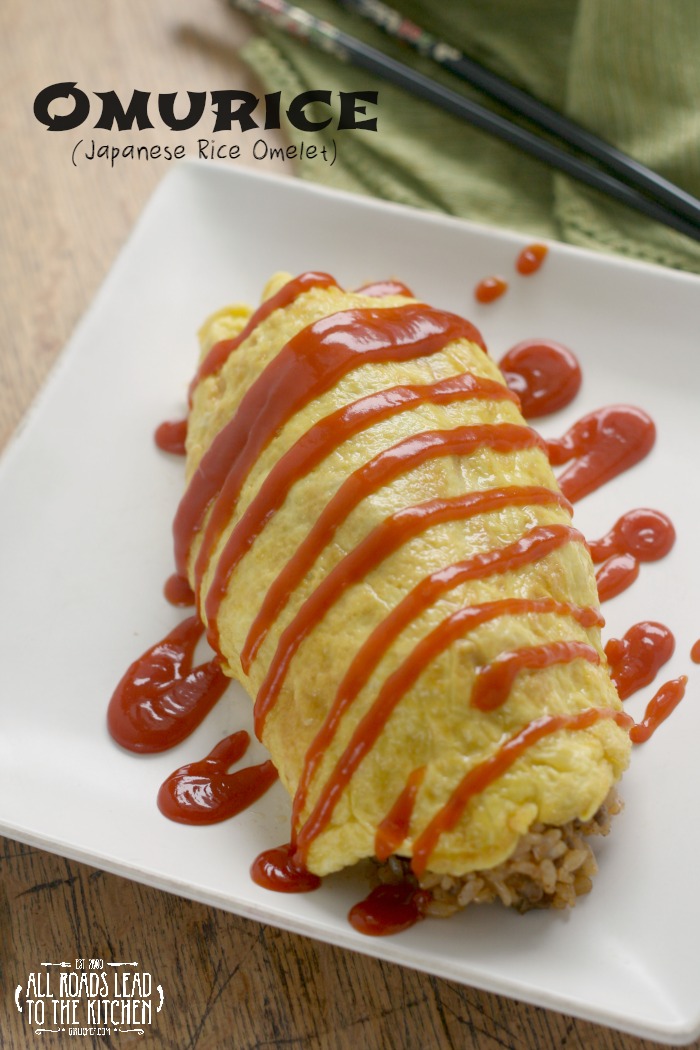
Omurice (Japanese Rice Omelet) inspired by Tampopo | #FoodnFlix
There are movies that contain food, and there are movies that celebrate food—this month's Food 'n Flix pick is one of the latter. Touted as the first-ever "Japanese Noodle Western", the 1985 film Tampopo has topped the list of "best food movies" for the past 30 years. But the crazy thing is that I—the person who started this movie-inspired food club almost 6 years ago—had never seen it before this month. I'm ashamed, but I finally righted that wrong by choosing it as our featured film in April.
Okay, so here's the thing...this is a Japanese comedy that might seem strange and disconnected to some. And it is, but in the most brilliant way. Because when you really look at it and really think about it, that seeming disconnect is actually the thread that binds everything together. It's an exploration of the role that food plays in life and all of its aspects: love, sex, happiness, simplicity, the pecking order, generosity, culture, and death.
Friday, April 1, 2016
Join the #FoodnFlix club in the kitchen with Tampopo!
The little club that I started over 5 1/2 years ago to explore and celebrate food in movies has come home this month. I'm hosting the April edition of Food 'n Flix with a movie that I'm almost ashamed to admit that I've never seen (but have meant to watch for years)—Tampopo!
Tampopo is a food-centric 1985 Japanese comedy whose publicity dubbed it the first "Ramen Western" as a play on the popular Spaghetti Western. Apparently there are now a bunch of ramen restaurants around the world that bear the name Tampopo (which means dandelion seed).
Wednesday, July 22, 2015
Whole Roasted Trout w/ Sake and Plums inspired by Flask of the Drunken Master
I'm so excited to be hosting a tour stop for Susan Spann's latest release in her Shinobi Mystery series today. I'll admit, it was initially the title that drew me in: Flask of the Drunken Master. I hadn't read (or even heard of) the books before, but I'm a huge kung-fu fan, and Drunken Master is one of my favorite kung-fu flicks, so I couldn't wait to read the book. Now, there's actually no kung-fu involved in the book, and it's set in Japan, not China...fortunately, that didn't stop me from enjoying every minute of it!
So, I mentioned that this book is actually part of a series; it's book three. I ordered the first two books in the series with the intention of reading them before this one, but time got away from me and I didn't get the chance. Now that I've read Flask of the Drunken Master, I can't wait to go back and get caught up with the first two books, but my experience wasn't lacking for not having read them already. It can stand on it's own if you want to dive right in.
Flask is a mystery set in Japan in the year 1565. Our main characters are the Hiro, a translator who, unbeknownst to most, is actually a shibobi (ninja), and Portuguese Jesuit Father Mateo. Together they are working to prove sake brewer Ginjiro innocent of the crime of murder, and find the real killer before he is executed for the crime.
So, I mentioned that this book is actually part of a series; it's book three. I ordered the first two books in the series with the intention of reading them before this one, but time got away from me and I didn't get the chance. Now that I've read Flask of the Drunken Master, I can't wait to go back and get caught up with the first two books, but my experience wasn't lacking for not having read them already. It can stand on it's own if you want to dive right in.
Flask is a mystery set in Japan in the year 1565. Our main characters are the Hiro, a translator who, unbeknownst to most, is actually a shibobi (ninja), and Portuguese Jesuit Father Mateo. Together they are working to prove sake brewer Ginjiro innocent of the crime of murder, and find the real killer before he is executed for the crime.
Friday, April 6, 2012
50 Women Game-Changers (in Food): #42 Harumi Kurihara - Lettuce-Wrapped Fried Chicken
the "Gourmet" prompt...
42. Harumi Kurihara- …who probably hates being incessantly called “the Japanese Martha Stewart.”This is my introduction to Harumi Kurihara. And I can see why she is referred to as the Japanese Martha Stewart -- she has a pretty amazing little empire going on. Yet, she still considers herself a housewife ("shufu"). Born in 1947, she married a TV newscaster in 1973 and had two children. Often, they had visitors from the television industry in their home and of course Harumi would serve them home cooking. Harumi was asked to work as an assistant on a cooking show.
Six years after she started working on the cooking show, she published her first cookbook (1989). In the years that followed, she managed to publish a cookbook a year. In '92 she published a new style of cookbook, Gociososama ga Kikitakute, in which she featured her family's favorite recipes. It was based on everyday home cooking and she used her own personal serving dishes, bowls, and utensils in the photographs. She hit it off big with this one, especially with the housewives and it became a bestseller, as did her follow-up Moichido Godhisosama ga Kikitakute. More than 10,000 copies of these two books are still reprinted each year with the total printed number of the two books now reaching more than two and a quarter million! In '96 she began publishing a quarterly recipe magazine entitled Suteki Recipe. It was the first personal magazine in Japan and it introduced her lifestyle as well as her cooking, gardening, and other creative things (enter the Martha moniker...she even has a book called Everyday Harumi). Her first English cookbook, Harumi's Japanese Cooking, was published in '05 and was named the best in World Asian Cuisine 2004 and Best Cookbook 2004 in the Gourmand World Cookbook Awards (the Oscars of Cookbooks).
But that's not all. She has hosted various television shows, currently "Your Japanese Kitchen" which started in '07 in which she introduces Japanese home-cooked dishes in English as well as a cooking corner called "Harumi Kitchen" every Thursday on a weekday morning program.
But wait! It doesn't stop there. In '95 Kurihara began to operate her business "Yutori no Kukan" which manages shops and restaurants. The shops sell kitchen items, interior goods, aprons, and clothes; there are 55 shops in major department stores across Japan. The 13 cafes and restaurants feature her original recipes on the menu.
She still considers herself (and likes being) a housewife. In this manner, she's always tried to introduce her recipes. Perhaps using leftover food in the fridge or ingredients that everyone has in their kitchen. But she adds unique twists to her cooking, giving birth to innovative original recipes. She takes the same approach (that of a housewife) in designing her products and goods, focusing on function and usability. She has a very popular apron line with more than 600 designs. She enjoys life and this is reflected in her wide range of products.
The only book I was actually able to get my hands on locally (library) was Harumi's Japanese Cooking. But that didn't post a problem. I had numerous sticky tabs popping out to mark things that I wanted to try. I wound up going for Japanese-style deep-fried chicken pieces. And am I ever happy that I did. The whole family loved it! The flavor that the marinade imparted on the chicken was fabulous. Wrapping the crispy, flavorful chicken in lettuce with herbs added a cool element. And I added some dipping sauces for good measure. It was a meal that will be repeated in our home.
Leaf-Wrapped Fried Chicken w/ Dipping Sauces
by Heather Schmitt-González
Prep Time: 15 mins. + time to marinate
Cook Time: 15-20 minutes
Keywords: fry entree chicken herbs lettuce avocado Japanese
Ingredients (serves 6-8)
- 3 lb. boneless, skinless chicken thighs
- ¾ c. potato starch or cornstach
- ½ c. all-purpose flour
- oil, for frying
- 3 Tbs. soy sauce
- 1½ Tbs. rice wine vinegar
- 4 fat cloves garlic, minced
- salt
- fresh cilantro, mint, and chives
- lettuce (like Romaine or butter), for wrapping
- 1 avocado
- ~3 oz. homemade tofu (or use soft/silken store-bought tofu)
- juice of ½ a lemon
- salt
- freshly ground pepper
- Sriracha
- Honey
Instructions
Cut each chicken thigh into ~6 or 7 pieces and place in a gallon-size resealable baggy. Add soy sauce, rice wine vinegar, minced garlic, and a couple pinches of salt to the bag. Seal and squidge it around so that all the chicken is coated. Refrigerate for 30 minutes to a few hours.
Whisk together flour and potato starch. Dip each piece of chicken into the mixture and shake off the excess.
Heat oil (an 1½-2" deep) until it is around 340° - 350° F. Carefully lower chicken pieces (in batches) into hot oil and fry until crisp, golden, and cooked through; ~4-5 minutes. Transfer cooked chicken to a paper towel-lined tray to drain and repeat until all of the chicken is fried.
Serve the deep-fried chicken with a variety of washed herbs and lettuce leaves. Wrap pieces of chicken in the leaves along with the herbs of your choice. Dip in one or more sauces, using your fingers. Enjoy!
You can choose your favorite dipping sauces to dip these in. I made a sweet and spicy dip and a cool, creamy dip. I think a hot mustard would be fabulous here, as well.
Combine equal parts Sriracha and honey and stir together. I recommend making a LOT, as this is super addictive. And tasty.
Combine all ingredients and mush together with the back of a spoon and then stir until smooth.
Powered by Recipage
In May '11, Gourmet posted a list of 50 Women Game-Changers (in Food) that runs the gamut from food writers to cookbook authors to television personalities to restauranteurs to chefs to food bloggers. Some are a given. Some are controversial. Speaking the names of some brings fond childhood memories. Speaking the names of others will make some readers cringe. And of course, some of our favorites were not even included. We food-lovers are a passionate bunch of people and whether we agree or disagree, every woman on this list has earned her place for a reason. Being a woman who is passionate about food (cooking, eating, talking about, writing about, photographing), when I caught wind of Mary from One Perfect Bite's idea of cooking/blogging her way through each of these 50 women...one per week...I knew I wanted to join her. Many of these women paved the way for us in culinary school, in the kitchen, in cookbooks, in food writing, and on television and I think it is a fabulous way to pay tribute to their efforts. Some of the women on the list have been tops with me for years. Some I have heard of (perhaps even seen, read, or cooked from) before. And there are even a handful that I am not familiar with at all. I excited to educate myself on each of these women game-changers and hope you look forward to reading along. We are going in order from 1 to 50.
Who is cooking along with these 50 Women Game-Changers?
Mary- One Perfect Bite, Val- More Than Burnt Toast, Joanne- Eats Well With Others, Taryn- Have Kitchen Will Feed, Susan- The Spice Garden, Heather- girlichef, Miranda- Mangoes and Chutney, Jeanette- Jeanette's Healthy Living, Kathy- Bakeaway with Me, Sue- The View from Great Island, Barbara- Moveable Feasts, Linda- There and Back Again, Nancy- Picadillo, Mireya- My Healthy Eating Habits, Veronica- My Catholic Kitchen, Annie- Lovely Things, Claudia- Journey of an Italian Cook, Alyce- More Time at the Table, Amrita- Beetle's Kitchen Escapades, Jill- Saucy Cooks, Sarah - Everything in the Kitchen Sink
I am sharing this post with:
Friday, March 30, 2012
Homemade Tofu - 50 Women Game-Changers (in Food): #41 Elizabeth Andoh
the "Gourmet" prompt...
41. Elizabeth Andoh- As Barbara Tropp was to Chinese food, so is Andoh to Japanese, with specialties in—who knew?—Japanese vegetarian, and the almost equally obscure home cooking.One of my absolute favorite things about food, cooking, and eating has always been the link to people, culture, and tradition. It's the ability to get to know someone...some place...through the plate they offer you. They plate they share with you. Food. Although there are countless dialects, it really is the universal language.
Wednesday, September 29, 2010
Daigaku Imo ...Caramel-Coated Sweet Potato for Regional Recipes
Some of you may remember telling you of a time when I did not understand the glory of the sweet potato. Can you imagine? Until the time when I first tasted one of these gorgeous, orange tubers unadulterated; roasted in its jacket...with nothing but a pat of golden butter to accentuate its natural sweetness...sticky-sweet juices peeking from the steam holes poked around the outsides before roasting. That was all it took. The skies opened up and a whole world of possibilities shone on the horizon!
I love sweet potatoes with a pat of butter, a smattering of bleu cheese and bacon, and a sprinkling of salt...that's my go-to. But I also like to try different avenues. I was flipping through a great book full of easy Japanese recipes in search of something to bring to the table for Regional Recipes this month when a page fell from my thumb...a page that required the fan of pages to stop. Immediately. Staring me in the face was THE exact thing I wanted in my belly. I read the description on my way to the library check-out desk, eyes glued to the page...led only by memory and spidey-sense...desire building and tummy waking from its slumber.

I love sweet potatoes with a pat of butter, a smattering of bleu cheese and bacon, and a sprinkling of salt...that's my go-to. But I also like to try different avenues. I was flipping through a great book full of easy Japanese recipes in search of something to bring to the table for Regional Recipes this month when a page fell from my thumb...a page that required the fan of pages to stop. Immediately. Staring me in the face was THE exact thing I wanted in my belly. I read the description on my way to the library check-out desk, eyes glued to the page...led only by memory and spidey-sense...desire building and tummy waking from its slumber.
"Daigaku imo (meaning "university potato") is so called because it was created to fill the stomachs of the young, cheaply and easily, and became very popular among university students living away from home. This dish is eaten as a sweet snack as well as a dessert."
Daigaku Imo
(Caramel-Coated Sweet Potato)
from Easy Japanese Cookbook by Emi Kazuko
serves 4
2 Tbs. sea salt
3-4 sweet potatoes (~1½ lbs), sliced lengthwise and cut into ½" thick half-moons
oil for deep-frying
½ c. sugar
1 tsp. shoyu (soy sauce)
1 Tbs. black sesame seeds (black, white, or a mix)
Stir the salt into 2 c. water and add the sweet potatoes; leave 10 minutes, then drain and pat dry with paper towels.
Heath the oil in a deep wok or pan to 200° F. Gently slide in the potatoes and deep-fry, gradually increasing the heat to a higher temperature,5-6 minutes until crisp and golden. Remove w/ slotted spoon and drain on wire rack.
Put sugar and shoyu in a large saucepan w/ 5 Tbs. water. Heat over medium heat 5-6 minutes, stirring until mixture becomes syrupy. Remove pan from heat and fold in hot, fried potatoes. Sprinkle w/ sesame seeds and serve hot.
These are an amazing snack...the light shell of salty caramel softly envelopes the crisp outsides of the sweet potato...and then you bite in, exposing a tender, warm semi-circle of bliss. It's the simple things in life, isn't it?
Subscribe to:
Posts (Atom)


+2.jpg)